


A History Channel documentary explores the evolution of playgrounds and recreational attractions in the United States, examining how changing attitudes towards risk, engineering and safety have shaped the places where children and families play today. Public playgrounds emerged in the late 1800s as cities such as New York, Boston and Philadelphia sought safe places for children to play amid rapid urbanisation and overcrowding. Community leaders promoted playgrounds as a healthier alternative to children spending time on busy streets, encouraging physical activity while helping reduce antisocial behaviour.
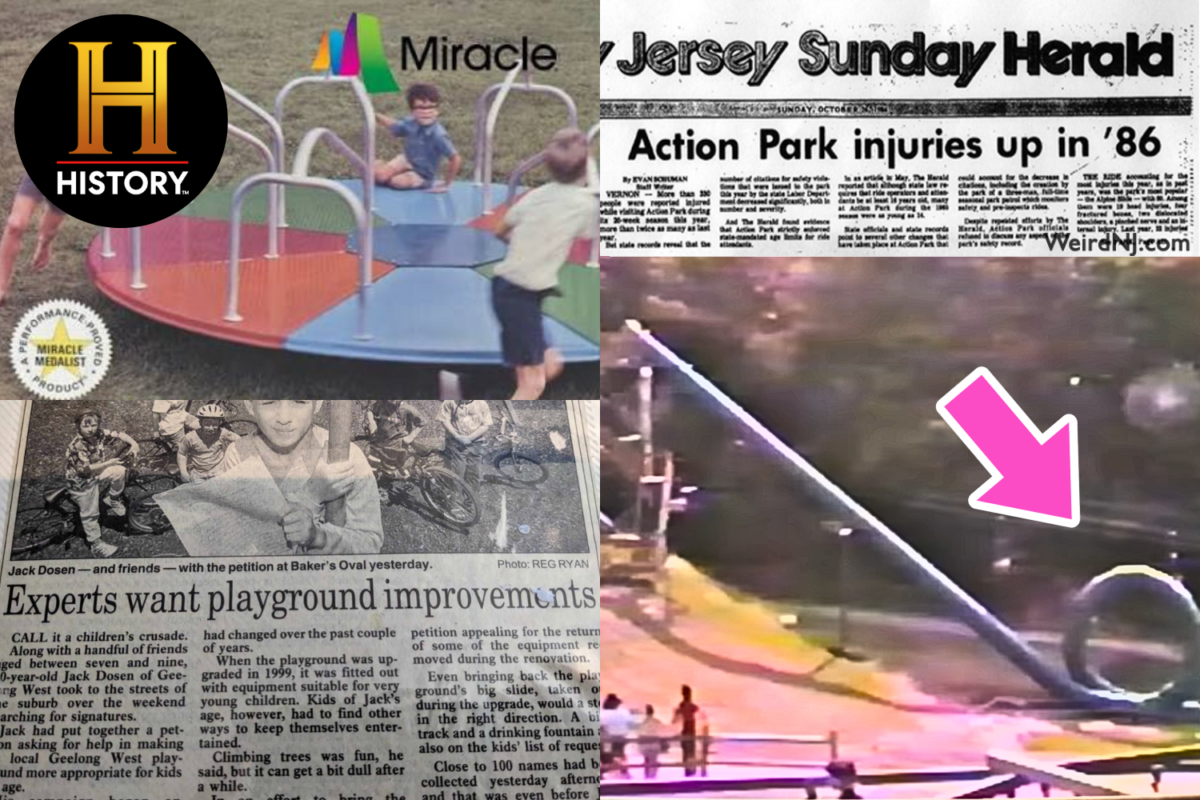
The documentary revisits some of the twentieth century’s most recognisable playground equipment, including giant metal slides and the Miracle Whirl (merry-go-round), the documentary explains how these attractions became icons of childhood adventure while also presenting significant hazards, including falls, collisions and entrapment risks, particularly when installed over asphalt, compacted earth or wood chips. One example involved a third-grade teacher who suffered a broken knee after being struck by a child thrown from a Miracle Whirl.
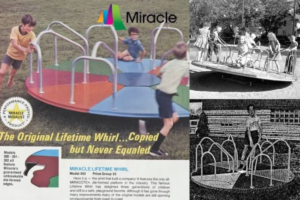
Historically manufactured as the Lifetime Whirl and Bounce-Around Whirl, these rides were linked to serious injuries including fractures, finger amputations, lacerations and entrapment incidents caused by exposed moving parts and central pivot mechanisms. Following legal action and settlements involving the U.S. Consumer Product Safety Commission (CPSC), traditional elevated metal whirls were largely phased out in favour of modern ground-level designs with enclosed bases, fixed handrails and speed-limiting features.

Examining the rise of high-risk amusement attractions during the 1970s and 1980s, the documentary focuses in on Action Park in New Jersey. Founded by entrepreneur Eugene “Gene” Mulvihill, the park became known for pushing the limits of thrill-seeking with attractions including cliff diving, whitewater rapids, alpine slides and experimental ride concepts. At the time, New Jersey had limited regulatory oversight of amusement rides, allowing many attractions to be developed with minimal external review.
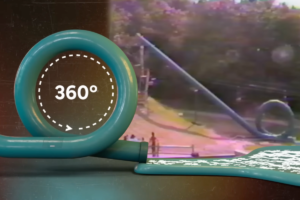
One of the park’s most infamous attractions was the Cannonball Loop, promoted as the world’s first looping waterslide. According to the documentary, Mulvihill conceived the ride despite having no engineering qualifications, with early testing reportedly carried out by his son and later by paid park employees. Riders frequently became trapped inside the loop when they failed to maintain enough speed to complete the circuit, eventually requiring an emergency escape hatch. The documentary also recounts reports of riders suffering cuts after teeth lost by previous riders became embedded in the fibreglass slide. Following numerous injuries, authorities intervened and the attraction was closed after operating for only a short period.
By comparing early playgrounds with attractions such as Action Park, the documentary illustrates how decades of injuries, engineering failures and changing community expectations have influenced today’s playgrounds, water parks and amusement facilities. While acknowledging the nostalgia many people have for these high-risk experiences, it concludes that modern safety standards, engineering practices and risk management