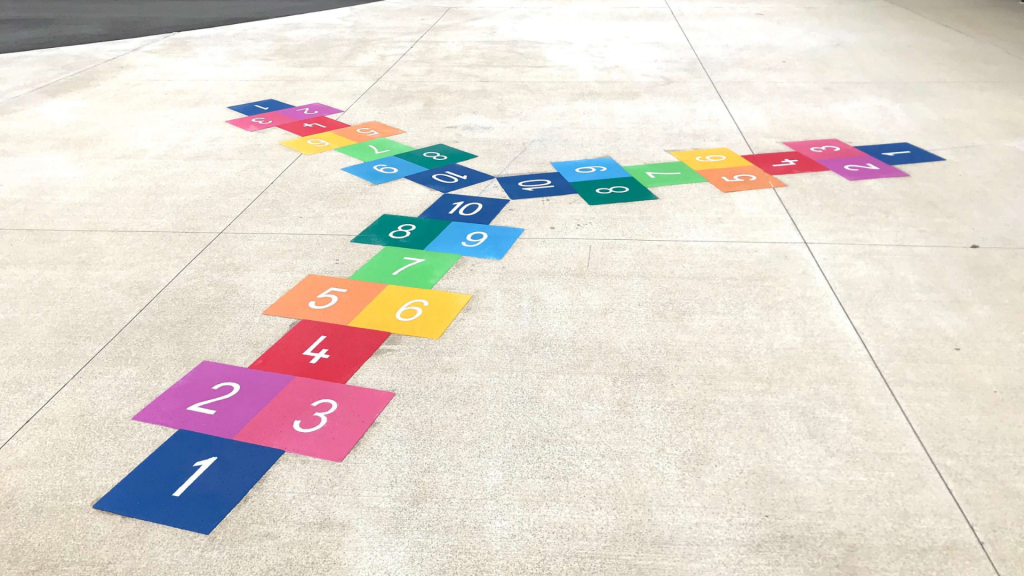



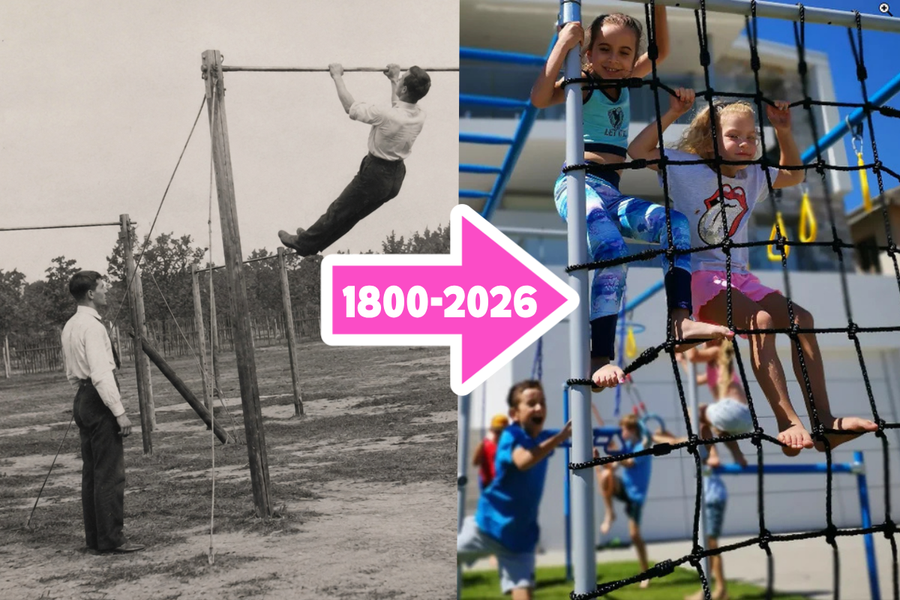
Modern playgrounds are widely associated with children’s recreation, development, and outdoor play, but historical research shows the earliest playground-style spaces were originally designed for adults focused on physical fitness and military-style exercise.
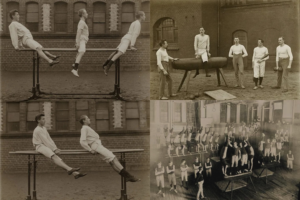
Public exercise grounds emerged in 19th century Germany during the Turnverein movement, where gymnastics equipment, climbing structures, balance apparatus, and obstacle-style activities were used to improve physical strength, discipline, and national fitness. During this time, children were not initially the focus of these spaces.
As industrialisation expanded across Europe and North America, concerns grew around overcrowded cities, unsafe streets, public health, and child welfare. Dedicated playgrounds later evolved as controlled environments where children could play safely away from traffic, factories, and urban hazards. Early playground designs often reflected strict ideas around discipline, structured movement, and physical development rather than imaginative free play.
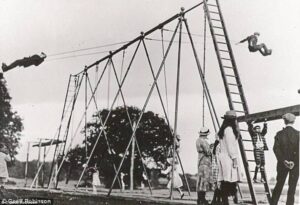
Playground design philosophy has changed over time, shifting from rigid metal equipment and standardised layouts towards more creative, inclusive, and developmental approaches. Modern playgrounds increasingly incorporate natural elements, sensory experiences, climbing challenges, accessibility features, and risk-balanced play concepts aimed at supporting physical, cognitive, and social development. Researchers and historians noted that playgrounds have continuously reflected broader social attitudes around childhood, safety, education, urban planning, recreation, and technology throughout history.